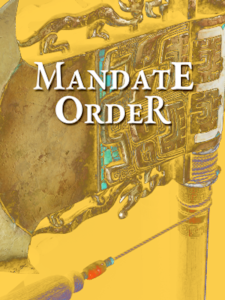
In this ancient Chinese war city-builder, conscription pulls workers out of farms, workshops, logistics, and production before they ever reach the battlefield.
In strategy games, building more soldiers often feels like the most direct form of security.
When enemies approach, players want more soldiers.
When borders feel unstable, they want more soldiers.
When resources begin to pile up, turning them into military power can feel like the obvious next step.It is a familiar strategy-game instinct: more troops mean thicker defenses, more offensive options, and a stronger sense of control.
But in a war city-builder with deeper simulation systems, an army should not be just a growing number.
Where does a soldier come from?
Was he originally part of the city’s workforce?
Who produced the weapon he carries?
Has that equipment actually reached the armory?
If he leaves a farm, workshop, construction site, or transport route, what slows down behind him?Once a game starts asking those questions, raising an army stops being only a military decision. It becomes a city management problem.
That is the direction Mandate Order is reinforcing with its recent conscription changes.
Developed by Digital Sky, Mandate Order is an ancient Chinese war city-builder set during the Spring and Autumn and Warring States era. The game is planned for a Q3 2026 launch window on Steam. Unlike strategy games where units are simply produced from a barracks queue, Mandate Order places soldiers back inside the city system: they begin as workers, require equipment, depend on armories, and leave their original jobs when conscripted.
In the latest adjustment, conscription no longer checks only whether the city “has equipment.” It is now more strictly centered on the armory. Without an armory, players cannot conscript. Only equipment stored inside the armory counts toward conscription. Weapons in transit or lying in ground resource piles no longer count as usable military equipment.
That makes army-building more than a population question.
It becomes a question of the entire city’s ability to mobilize.

Equipment Must Actually Reach the Armory
The most important part of the recent conscription adjustment is the armory rule.
If there is no armory, conscription is not available. More importantly, only equipment stored inside the armory is counted for conscription. Weapons and armor must physically reach the armory before the system treats them as usable.
This directly changes how players prepare for war.
Previously, a player might think that once a workshop had produced weapons, those weapons could immediately become military power. Now, the player needs to check one more step: have those weapons actually been delivered to the armory?
If swords, polearms, bows, shields, or armor are still being transported, or if they are sitting in a ground resource pile, they do not count toward conscription.
This turns the armory from a simple storage building into the center of military mobilization.
Ore must be gathered.
Workshops must turn materials into weapons.
Workers must deliver equipment to the armory.
Only equipment inside the armory appears as usable conscription stock.If any part of that chain slows down, players may face a very specific problem: the city has weapons somewhere, but still cannot raise the soldiers it needs.
The result is clearer pre-war preparation. Players are not reading a global resource number. They are checking what is actually available inside the armory.
Conscription Now Asks Players to Choose Equipment More Precisely
The updated conscription interface also adds sub-equipment selection.
That means players are not only choosing to raise troops. They can more specifically decide which type of equipment will be used for the mobilization. Weapon categories are also being reorganized, including short weapons, long weapons, and ranged weapons.
This makes conscription feel more like preparing the army’s equipment, rather than simply clicking a recruitment button.
If players need archers, they need enough ranged weapons in the armory.
If they need melee infantry, they need to check short or long weapon stock.
If they want troops who can better survive direct combat, they need to consider shields and armor.Armor is not an absolute requirement for conscription, but troops without proper protection will be much weaker in battle. That creates a practical choice.
Should the player raise an under-equipped force immediately because enemies are coming?
Or should they wait longer, let workshops keep producing, and allow more complete equipment to enter the armory?This is where Mandate Order’s conscription system becomes more strategic.
The question is no longer only “How many people can I raise?” It is also “What equipment will they use?” “Where is that equipment?” and “What battlefield role can this force actually handle?”
Players Decide Who to Pull Out, Not Just How Many
Population in Mandate Order is organized around the “Wu.” Each Wu represents roughly five workers, and those workers form the basic labor force behind the city.
They gather resources, build structures, haul goods, farm fields, and produce materials in workshops. Buildings also need assigned Wu to function properly. In other words, the city is not powered by abstract population numbers. It is powered by groups of workers already performing tasks.
Conscription therefore changes labor allocation.
The latest adjustment adds two conscription priorities:
“Fastest” prioritizes Wu and workers closest to the armory.
“Lowest work impact” prioritizes idle workers, or those whose removal will have less effect on current production.These two options make the pre-conscription decision much clearer.
If enemies are already close, players may choose “Fastest.” The system will favor workers near the armory, allowing them to receive equipment and respond more quickly. This is useful in an emergency, but it may also interrupt work in nearby workshops, warehouses, or construction sites.
If the situation is not yet critical, players may choose “Lowest work impact.” The system will try to pull idle workers first, or workers whose absence causes less disruption. Mobilization may be slower, but the city’s farms, production, logistics, and construction are less likely to be disturbed.
This changes the question from:
How many soldiers do I want?
To:
Do I need the fastest possible army, or do I need to keep the city running?
That is where conscription becomes city management.
Once a Rally Point Is Confirmed, Workers Stop What They Are Doing
The cost of conscription appears immediately after the player confirms a rally point.
Under the new rule, conscripted workers immediately stop their current job and respond to the call. If they are carrying goods, those goods are left on the ground.
This detail matters because it gives emergency mobilization a visible cost.
A worker may be carrying timber to a wall construction site.
Another may be delivering ore to a workshop.
Another may be transporting newly produced weapons.
Another may be working on a farm or construction task.Once that worker is conscripted, the original task stops. Whatever he was carrying may be left behind.
This means large-scale conscription can immediately disturb the city behind the army.
Building materials may be left on the road. Workshops may wait longer for raw materials. Farm maintenance may slow down. Equipment may take longer to reach the armory.
Conscription in Mandate Order is therefore not a cost-free “raise army” button.
It is more like rerouting part of the city’s labor system. The player takes workers out of the production network and moves them into the military network. The front line becomes stronger, but the rear now has gaps.

Sick, Injured, and Plague-Infected Workers Are Excluded by Default
The updated system also makes conscription filtering more reasonable.
Sick, injured, and plague-infected workers are excluded by default. This prevents players from accidentally sending unsuitable workers to the front during urgent mobilization.
This is not just a minor quality-of-life detail.
In Mandate Order, workers can become sick, injured, or infected by plague. Illness can reduce work efficiency. Severe injury or disease can become fatal. Plague can also spread.
If those workers were pulled directly into an army, it would create both logical and gameplay problems. It would also make it harder for players to understand the actual quality of the force they had raised. By excluding them by default, the game makes conscripted soldiers closer to reliable battlefield strength.
This also links hospitals, medicine, disease control, and population status back into military systems.
Players do not only check how many people they have. They also need to know whether those people are healthy, mobilizable, and suitable for combat.
Disbanded Soldiers Return Equipment to the Armory
Conscription does not end when battle begins.
After a fight, soldiers may be disbanded, and their equipment has to return somewhere.
Under the new rule, when soldiers are disbanded, equipment is prioritized to return to the armory. This makes the armory not only the starting point of conscription, but also the endpoint of demobilization.
That creates a clearer war cycle:
Before battle, workshops produce equipment.
Logistics moves equipment into the armory.
During conscription, workers take equipment from the armory.
After battle, disbanded soldiers return equipment to the armory.
Before the next conflict, players check armory stock again.This is closer to a mobilization and demobilization loop than a simple “train, fight, delete” cycle.
It also makes armory placement, capacity, and stock management more important. In the recent adjustment, the armory has become a unique building, and its capacity has temporarily increased from 500 to 2000. That gives it a more centralized and explicit military-storage role.
Players need to think not only about whether the armory exists, but whether it can support storage, distribution, and recovery over multiple conflicts.
Invasion Pressure Makes Mobilization Timing Matter
The conscription changes are not happening in isolation.
The same update also adjusts invasion mechanics. Enemies are no longer just a fixed wave arriving on a timer. When starting a new game, players can adjust more invasion-related parameters, including the first appearance time and invasion cycle.
Bandits also become more active. They periodically demand resources from the player, which may include currency or specific goods. Players can comply temporarily, or refuse. If they refuse, bandits attack, target high-value storage buildings, destroy facilities along the way, and loot goods. If they have not taken enough, they will not easily retreat.
This adds more pressure to conscription.
If enemies always arrived at a fixed time, players could prepare soldiers on a predictable schedule. But if bandits can demand resources, attack after refusal, target valuable buildings, and escalate over time, players need to make mobilization decisions more flexibly.
Should they conscript early?
Should they stock the armory first?
Should they accept production disruption to defend key warehouses or the armory?
If they refuse a bandit demand, can the city raise a force quickly enough?Here, conscription is no longer an isolated pre-battle button. It connects to starting parameters, bandit pressure, resource storage, and armory placement.

More Soldiers Are Not Always Stronger. Timely Mobilization Is the Real Question
This is why “more soldiers do not always mean a stronger army” makes sense in Mandate Order.
Conscription is not simple expansion.
Players need to build an armory.
Equipment needs to actually enter that armory.
The conscription interface asks for specific equipment choices.
Players choose between faster mobilization and lower work disruption.
Conscripted workers immediately stop their current tasks.
Sick, injured, and plague-infected workers are excluded.
Disbanded soldiers return equipment to the armory.
Invasions and bandits create pressure around when to mobilize.Together, these rules make one thing clear:
An army is not an isolated combat resource. It is the result of a city’s ability to mobilize.
If equipment has not reached the armory, population alone cannot become soldiers quickly.
If conscription happens too aggressively, production, logistics, and construction are interrupted.
If the armory is poorly placed, assembly and reinforcement slow down.
If too much labor is pulled from the rear, the front may become stronger in the short term while the city weakens behind it.For players, the real question is no longer “How many people can I raise?”
It is:
Can I raise a useful force in time without breaking the city that supports it?
That is the strategic value Mandate Order’s conscription system is trying to create.
These are not just update-log rule changes. They place the idea of ancient military mobilization inside the loop of city-building and resource management.
In Mandate Order, war does not begin when soldiers reach the wall.
It begins when the first weapon enters the armory, and when the player decides which Wu can be pulled away from the city.
About Mandate Order
Mandate Order is an ancient Chinese war city-builder developed by Digital Sky, an independent studio based in Chengdu, China. Set during the Spring and Autumn and Warring States era, the game starts players with a small frontier settlement and asks them to develop it into a functioning military stronghold. Players build homes, wells, fields, warehouses, workshops, barracks, armories, walls, and defensive structures while managing resources, population needs, logistics, retainers, diplomacy, and battlefield tactics. The game is currently listed on Steam, supports 12 languages, and is planned for a Q3 2026 launch window.
Steam
Official X
Official website
In strategy games, building more soldiers often feels like the most direct form of security.
When enemies approach, players want more soldiers.
When borders feel unstable, they want more soldiers.
When resources begin to pile up, turning them into military power can feel like the obvious next step.It is a familiar strategy-game instinct: more troops mean thicker defenses, more offensive options, and a stronger sense of control.
But in a war city-builder with deeper simulation systems, an army should not be just a growing number.
Where does a soldier come from?
Was he originally part of the city’s workforce?
Who produced the weapon he carries?
Has that equipment actually reached the armory?
If he leaves a farm, workshop, construction site, or transport route, what slows down behind him?Once a game starts asking those questions, raising an army stops being only a military decision. It becomes a city management problem.
That is the direction Mandate Order is reinforcing with its recent conscription changes.
Developed by Digital Sky, Mandate Order is an ancient Chinese war city-builder set during the Spring and Autumn and Warring States era. The game is planned for a Q3 2026 launch window on Steam. Unlike strategy games where units are simply produced from a barracks queue, Mandate Order places soldiers back inside the city system: they begin as workers, require equipment, depend on armories, and leave their original jobs when conscripted.
In the latest adjustment, conscription no longer checks only whether the city “has equipment.” It is now more strictly centered on the armory. Without an armory, players cannot conscript. Only equipment stored inside the armory counts toward conscription. Weapons in transit or lying in ground resource piles no longer count as usable military equipment.
That makes army-building more than a population question.
It becomes a question of the entire city’s ability to mobilize.
Equipment Must Actually Reach the Armory
The most important part of the recent conscription adjustment is the armory rule.
If there is no armory, conscription is not available. More importantly, only equipment stored inside the armory is counted for conscription. Weapons and armor must physically reach the armory before the system treats them as usable.
This directly changes how players prepare for war.
Previously, a player might think that once a workshop had produced weapons, those weapons could immediately become military power. Now, the player needs to check one more step: have those weapons actually been delivered to the armory?
If swords, polearms, bows, shields, or armor are still being transported, or if they are sitting in a ground resource pile, they do not count toward conscription.
This turns the armory from a simple storage building into the center of military mobilization.
Ore must be gathered.
Workshops must turn materials into weapons.
Workers must deliver equipment to the armory.
Only equipment inside the armory appears as usable conscription stock.If any part of that chain slows down, players may face a very specific problem: the city has weapons somewhere, but still cannot raise the soldiers it needs.
The result is clearer pre-war preparation. Players are not reading a global resource number. They are checking what is actually available inside the armory.
Conscription Now Asks Players to Choose Equipment More Precisely
The updated conscription interface also adds sub-equipment selection.
That means players are not only choosing to raise troops. They can more specifically decide which type of equipment will be used for the mobilization. Weapon categories are also being reorganized, including short weapons, long weapons, and ranged weapons.
This makes conscription feel more like preparing the army’s equipment, rather than simply clicking a recruitment button.
If players need archers, they need enough ranged weapons in the armory.
If they need melee infantry, they need to check short or long weapon stock.
If they want troops who can better survive direct combat, they need to consider shields and armor.Armor is not an absolute requirement for conscription, but troops without proper protection will be much weaker in battle. That creates a practical choice.
Should the player raise an under-equipped force immediately because enemies are coming?
Or should they wait longer, let workshops keep producing, and allow more complete equipment to enter the armory?This is where Mandate Order’s conscription system becomes more strategic.
The question is no longer only “How many people can I raise?” It is also “What equipment will they use?” “Where is that equipment?” and “What battlefield role can this force actually handle?”
Players Decide Who to Pull Out, Not Just How Many
Population in Mandate Order is organized around the “Wu.” Each Wu represents roughly five workers, and those workers form the basic labor force behind the city.
They gather resources, build structures, haul goods, farm fields, and produce materials in workshops. Buildings also need assigned Wu to function properly. In other words, the city is not powered by abstract population numbers. It is powered by groups of workers already performing tasks.
Conscription therefore changes labor allocation.
The latest adjustment adds two conscription priorities:
“Fastest” prioritizes Wu and workers closest to the armory.
“Lowest work impact” prioritizes idle workers, or those whose removal will have less effect on current production.These two options make the pre-conscription decision much clearer.
If enemies are already close, players may choose “Fastest.” The system will favor workers near the armory, allowing them to receive equipment and respond more quickly. This is useful in an emergency, but it may also interrupt work in nearby workshops, warehouses, or construction sites.
If the situation is not yet critical, players may choose “Lowest work impact.” The system will try to pull idle workers first, or workers whose absence causes less disruption. Mobilization may be slower, but the city’s farms, production, logistics, and construction are less likely to be disturbed.
This changes the question from:
How many soldiers do I want?
To:
Do I need the fastest possible army, or do I need to keep the city running?
That is where conscription becomes city management.
Once a Rally Point Is Confirmed, Workers Stop What They Are Doing
The cost of conscription appears immediately after the player confirms a rally point.
Under the new rule, conscripted workers immediately stop their current job and respond to the call. If they are carrying goods, those goods are left on the ground.
This detail matters because it gives emergency mobilization a visible cost.
A worker may be carrying timber to a wall construction site.
Another may be delivering ore to a workshop.
Another may be transporting newly produced weapons.
Another may be working on a farm or construction task.Once that worker is conscripted, the original task stops. Whatever he was carrying may be left behind.
This means large-scale conscription can immediately disturb the city behind the army.
Building materials may be left on the road. Workshops may wait longer for raw materials. Farm maintenance may slow down. Equipment may take longer to reach the armory.
Conscription in Mandate Order is therefore not a cost-free “raise army” button.
It is more like rerouting part of the city’s labor system. The player takes workers out of the production network and moves them into the military network. The front line becomes stronger, but the rear now has gaps.
Sick, Injured, and Plague-Infected Workers Are Excluded by Default
The updated system also makes conscription filtering more reasonable.
Sick, injured, and plague-infected workers are excluded by default. This prevents players from accidentally sending unsuitable workers to the front during urgent mobilization.
This is not just a minor quality-of-life detail.
In Mandate Order, workers can become sick, injured, or infected by plague. Illness can reduce work efficiency. Severe injury or disease can become fatal. Plague can also spread.
If those workers were pulled directly into an army, it would create both logical and gameplay problems. It would also make it harder for players to understand the actual quality of the force they had raised. By excluding them by default, the game makes conscripted soldiers closer to reliable battlefield strength.
This also links hospitals, medicine, disease control, and population status back into military systems.
Players do not only check how many people they have. They also need to know whether those people are healthy, mobilizable, and suitable for combat.
Disbanded Soldiers Return Equipment to the Armory
Conscription does not end when battle begins.
After a fight, soldiers may be disbanded, and their equipment has to return somewhere.
Under the new rule, when soldiers are disbanded, equipment is prioritized to return to the armory. This makes the armory not only the starting point of conscription, but also the endpoint of demobilization.
That creates a clearer war cycle:
Before battle, workshops produce equipment.
Logistics moves equipment into the armory.
During conscription, workers take equipment from the armory.
After battle, disbanded soldiers return equipment to the armory.
Before the next conflict, players check armory stock again.This is closer to a mobilization and demobilization loop than a simple “train, fight, delete” cycle.
It also makes armory placement, capacity, and stock management more important. In the recent adjustment, the armory has become a unique building, and its capacity has temporarily increased from 500 to 2000. That gives it a more centralized and explicit military-storage role.
Players need to think not only about whether the armory exists, but whether it can support storage, distribution, and recovery over multiple conflicts.
Invasion Pressure Makes Mobilization Timing Matter
The conscription changes are not happening in isolation.
The same update also adjusts invasion mechanics. Enemies are no longer just a fixed wave arriving on a timer. When starting a new game, players can adjust more invasion-related parameters, including the first appearance time and invasion cycle.
Bandits also become more active. They periodically demand resources from the player, which may include currency or specific goods. Players can comply temporarily, or refuse. If they refuse, bandits attack, target high-value storage buildings, destroy facilities along the way, and loot goods. If they have not taken enough, they will not easily retreat.
This adds more pressure to conscription.
If enemies always arrived at a fixed time, players could prepare soldiers on a predictable schedule. But if bandits can demand resources, attack after refusal, target valuable buildings, and escalate over time, players need to make mobilization decisions more flexibly.
Should they conscript early?
Should they stock the armory first?
Should they accept production disruption to defend key warehouses or the armory?
If they refuse a bandit demand, can the city raise a force quickly enough?Here, conscription is no longer an isolated pre-battle button. It connects to starting parameters, bandit pressure, resource storage, and armory placement.
More Soldiers Are Not Always Stronger. Timely Mobilization Is the Real Question
This is why “more soldiers do not always mean a stronger army” makes sense in Mandate Order.
Conscription is not simple expansion.
Players need to build an armory.
Equipment needs to actually enter that armory.
The conscription interface asks for specific equipment choices.
Players choose between faster mobilization and lower work disruption.
Conscripted workers immediately stop their current tasks.
Sick, injured, and plague-infected workers are excluded.
Disbanded soldiers return equipment to the armory.
Invasions and bandits create pressure around when to mobilize.Together, these rules make one thing clear:
An army is not an isolated combat resource. It is the result of a city’s ability to mobilize.
If equipment has not reached the armory, population alone cannot become soldiers quickly.
If conscription happens too aggressively, production, logistics, and construction are interrupted.
If the armory is poorly placed, assembly and reinforcement slow down.
If too much labor is pulled from the rear, the front may become stronger in the short term while the city weakens behind it.For players, the real question is no longer “How many people can I raise?”
It is:
Can I raise a useful force in time without breaking the city that supports it?
That is the strategic value Mandate Order’s conscription system is trying to create.
These are not just update-log rule changes. They place the idea of ancient military mobilization inside the loop of city-building and resource management.
In Mandate Order, war does not begin when soldiers reach the wall.
It begins when the first weapon enters the armory, and when the player decides which Wu can be pulled away from the city.
About Mandate Order
Mandate Order is an ancient Chinese war city-builder developed by Digital Sky, an independent studio based in Chengdu, China. Set during the Spring and Autumn and Warring States era, the game starts players with a small frontier settlement and asks them to develop it into a functioning military stronghold. Players build homes, wells, fields, warehouses, workshops, barracks, armories, walls, and defensive structures while managing resources, population needs, logistics, retainers, diplomacy, and battlefield tactics. The game is currently listed on Steam, supports 12 languages, and is planned for a Q3 2026 launch window.
Steam
Official X
Official website