Steam Next Fest has ended, and PC players have once again gone through a week of dense demo discovery.
The value of Steam Next Fest is not only that it gives players access to a large number of upcoming games. It also works as a concentrated test for new titles. A game has a short window to show what it is, why it is interesting, and why players should keep paying attention after the demo rush is over.
That is especially difficult for strategy games.
Unlike action, horror, or shooters, which can often deliver immediate feedback within minutes, strategy games usually need more time. Players have to understand resources, buildings, units, maps, combat, diplomacy, economy, and long-term goals. More systems can mean more depth, but if players do not understand why those systems exist, depth can quickly become friction.
After Steam Next Fest, one question feels especially relevant: strategy games may not need only more systems. They need clearer reasons for those systems to matter.
This is particularly true for war-focused strategy and city-building games. When a game asks players to farm, build roads, construct warehouses, manage population, produce weapons, and defend walls, players need to understand how those actions connect to conflict. Why am I preparing all of this? How does it change the next battle?
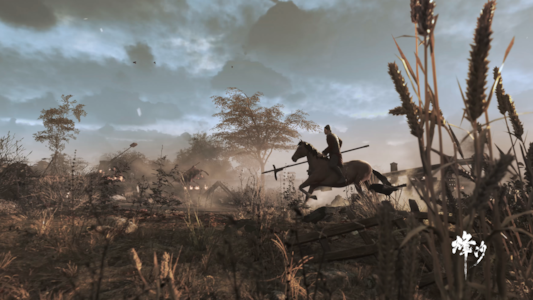
Mandate Order did not participate in this Steam Next Fest, but it is currently moving toward a Q3 2026 launch window, making it a useful case to consider in this post-Next Fest discussion. Developed by Digital Sky, Mandate Order is an ancient Chinese war city-builder that organizes its systems around a direct question: how does a city support a war?

Hybrid Strategy Games Need Clearer Causality
Looking across strategy-related demos from this Next Fest, one trend is clear: many games are no longer sitting neatly inside a single category. City-building is being combined with combat. RTS games are borrowing grand strategy ideas. Tactical games are adding exploration and survival. Management games are mixing in politics, family systems, or diplomacy.
That trend makes sense. Strategy players are often willing to learn complex systems and accept longer onboarding. The risk is that complexity alone does not create a better game.
A game can combine city-building, combat, resources, diplomacy, and character systems, but if players cannot understand how those parts affect one another, the result can feel like noise.
The valuable kind of hybrid design is the one where systems create consequences.
Building is not just about filling space. It changes how resources move. Resources are not just numbers. They support production and military preparation. Weapons are not just unlocks. They determine whether workers can become soldiers. Walls are not just borders. They change how battles happen.
That is where Mandate Order’s premise becomes relevant. The game does not simply place city-building and combat side by side. It tries to show how war grows out of a city’s daily operations.
Population and Farming Explain How a City Can Afford War
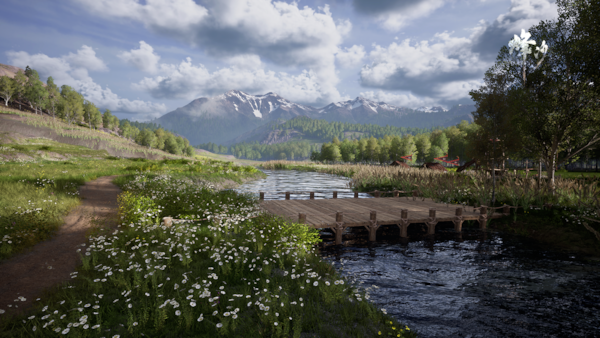
Mandate Order does not begin by handing players an army. It begins with a fragile settlement.
Players start by building homes, wells, fields, warehouses, and workshops so the city can function. Population is organized around the “Wu,” a small labor unit representing roughly five workers. These workers are not abstract population points. They gather wood, carry stone, construct buildings, farm fields, and operate workshops.
Workers also have needs. Food, water, housing, fuel, and surplus reserves affect morale. When morale is high, new Wu can join the settlement. When morale falls, population growth may slow, and stability can become a problem.
This gives Mandate Order its first reason for war: conflict does not begin when the player presses a battle button. It begins when a city has built enough population, labor, and organization to support military action.
Farming makes that relationship more concrete. Players open fields and assign workers to cultivate, sow, water, maintain, and harvest them. Fields are affected by labor, water, fertility, and seasonal change. Spring plowing, summer tending, autumn harvest, and winter storage are not just visual themes. They affect when players expand, when they store food, and when they prepare for winter.
If players grow population before food is stable, consumption rises. If they conscript too many workers during busy farming periods, production slows. If food and fuel reserves are weak before winter, morale and productivity may suffer.
In Mandate Order, farming is not a separate early-game task. It determines whether the city can sustain the labor force that eventually builds, transports, produces, and fights.
Logistics and Armories Explain How Resources Become Military Power
Many strategy games treat resources as global numbers. Mandate Order places resources inside the settlement’s physical movement and storage systems.
The game includes logs, stone, clay, ore, grain, fuel, weapons, shields, armor, medicine, chariots, ballista carts, and catapults. These goods must be gathered, carried, processed, stored, and delivered to the buildings that need them.
This means having a resource somewhere in the city does not automatically make it usable.
A construction site may be waiting because timber has not arrived. A workshop may stop because ore has not reached it. Food may exist, but workers may still waste time hauling it from the wrong place. Weapons may be produced, but if they have not entered the armory, they cannot support conscription.
This gives Mandate Order its second reason for war: military power is not created by resource totals, but by whether resources reach the right place in time.
Players use warehouses, freight stations, and courier posts to manage that flow. Warehouses handle storage. Freight stations can be configured with local supply and remote demand, such as ore supplied from a mining area and demanded near the main city. Courier posts improve transport capacity by assigning workers to more efficient hauling tasks.
The armory is the key link between production and military mobilization.
To conscript soldiers, players need the right equipment. Swords, polearms, bows, shields, and armor must be produced in workshops and stored in the armory. Only then can workers become specific troop types.
If the armory does not contain the required weapons, workers cannot become the corresponding soldiers. If weapons are still in transit or sitting in resource piles instead of stored properly, conscription can be delayed. If the armory is too far from workshops, equipment takes longer to arrive. If it is too far from the defensive line, wartime reinforcement may become less efficient.
Mandate Order does not ask only, “How many soldiers can I make?” It asks whether the city has the equipment, labor, and logistics to turn workers into soldiers when needed.
Fortifications and Formations Explain How Preparation Enters Battle
Mandate Order does not turn combat entirely into automatic resolution.
Players can plan walls, gates, towers, and defensive structures. Soldiers can stand on walls. Archers can attack from elevated positions. Ballistae and other defensive equipment can cover key routes. Gate placement, road connections, tower layout, and defensive coverage all affect how a siege unfolds.
A badly placed gate can expose the city interior. Poor roads can slow soldiers moving from barracks to the walls. An armory too far from the front can delay reinforcement. A weakly covered approach can give enemies a way through the defense.
Combat also includes a line-drawing formation system. After selecting units, players can hold the right mouse button and draw a line at the target location. Units move and deploy along that shape. Multiple units can advance in formation and then spread into the player’s drawn line near the destination.
This gives Mandate Order its third reason for war: the city players build does not stay inside the management layer. It enters the battlefield.
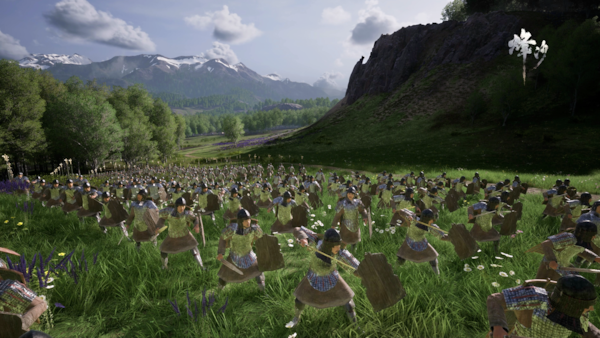
Shield units can hold the front. Archers can fire from behind or from walls. Polearm troops can engage in melee. Chariots can look for opportunities to charge and disrupt enemy formations. Chariots give Mandate Order’s battles a stronger Warring States identity, emphasizing impact and formation disruption rather than simply reskinning infantry.
Walls, roads, armories, barracks, and formation control all shape how a siege plays out. In battle, players face not only the enemy army, but also the consequences of their earlier city planning.
Historical Setting Becomes a Strategic Route
Mandate Order’s ancient Chinese setting is not only a visual theme.
The game includes a retainer system based on the Hundred Schools of Thought. Retainers can come from schools such as Confucianism, Daoism, Mohism, Legalism, Military Strategy, Agriculturalism, Jiran, and Yin-Yang thought. They can affect farming, governance, military development, diplomacy, and policy direction.
This gives the setting a gameplay role.
Agricultural retainers may strengthen survival and food production. Mohist or defensive retainers may connect more naturally with production, engineering, and fortification. Military retainers may support combat preparation. Economic or diplomatic retainers may help with trade, resource management, and external relations.
The result is another kind of reason for war: different cities can prepare for disorder in different ways.
One city may rely on stable agriculture and population growth. Another may emphasize fortification and defense. Another may prepare for war earlier, while another may use trade or diplomacy to reduce pressure.
The Spring and Autumn and Warring States setting is not just lore. Through retainers, policy, conscription, fortification, and diplomacy, it shapes how the city works and how it prepares for conflict.
Clearer Reasons Are What Make Complexity Worthwhile
Mandate Order’s relevance in a post-Next Fest strategy discussion is not that it contains many systems. It is that those systems are organized around a question players can understand:
Why can this city fight?
Players farm to support workers and population. They build warehouses, freight stations, and courier posts so resources can move. They produce weapons so the armory can support conscription. They build walls so the defensive line matters in combat. They draw formations so prepared troops can be deployed correctly. They recruit retainers to shape the city’s long-term direction.
Those connections are more specific than simply saying “city-building plus combat.” They give each system a reason to matter.
If a siege fails, players can look back and ask: was food unstable? Did conscription remove too much labor? Did weapons fail to reach the armory? Did logistics fail to deliver resources? Did gates and roads prevent soldiers from reaching the front?
That kind of readable cause and effect is what makes complex strategy games worth learning.
Mandate Order did not participate in this Steam Next Fest, but as it moves toward its Q3 2026 launch window, it fits into the post-festival conversation. It is a concrete example of a game trying to organize farming, logistics, armories, conscription, fortifications, formations, and retainers into a clearer answer to why war happens and how a city can support it.

About Mandate Order
Mandate Order is an ancient Chinese war city-builder developed by Digital Sky, an independent studio based in Chengdu, China. Set during the Spring and Autumn and Warring States era, the game starts players with a small frontier settlement and asks them to develop it into a functioning military stronghold. Players will build homes, wells, fields, warehouses, workshops, barracks, armories, walls, and defensive structures, while managing resources, population needs, logistics, retainers, diplomacy, and battlefield tactics. Rather than treating war as a separate combat layer, Mandate Order connects warfare to the full operation of the city — from food production and supply chains to conscription, fortification, and formation-based battles. The game is currently listed on Steam, supports 12 languages, and is planned for a Q3 2026 launch window.
Steam
Official X
Official website
The value of Steam Next Fest is not only that it gives players access to a large number of upcoming games. It also works as a concentrated test for new titles. A game has a short window to show what it is, why it is interesting, and why players should keep paying attention after the demo rush is over.
That is especially difficult for strategy games.
Unlike action, horror, or shooters, which can often deliver immediate feedback within minutes, strategy games usually need more time. Players have to understand resources, buildings, units, maps, combat, diplomacy, economy, and long-term goals. More systems can mean more depth, but if players do not understand why those systems exist, depth can quickly become friction.
After Steam Next Fest, one question feels especially relevant: strategy games may not need only more systems. They need clearer reasons for those systems to matter.
This is particularly true for war-focused strategy and city-building games. When a game asks players to farm, build roads, construct warehouses, manage population, produce weapons, and defend walls, players need to understand how those actions connect to conflict. Why am I preparing all of this? How does it change the next battle?
Mandate Order did not participate in this Steam Next Fest, but it is currently moving toward a Q3 2026 launch window, making it a useful case to consider in this post-Next Fest discussion. Developed by Digital Sky, Mandate Order is an ancient Chinese war city-builder that organizes its systems around a direct question: how does a city support a war?
Hybrid Strategy Games Need Clearer Causality
Looking across strategy-related demos from this Next Fest, one trend is clear: many games are no longer sitting neatly inside a single category. City-building is being combined with combat. RTS games are borrowing grand strategy ideas. Tactical games are adding exploration and survival. Management games are mixing in politics, family systems, or diplomacy.
That trend makes sense. Strategy players are often willing to learn complex systems and accept longer onboarding. The risk is that complexity alone does not create a better game.
A game can combine city-building, combat, resources, diplomacy, and character systems, but if players cannot understand how those parts affect one another, the result can feel like noise.
The valuable kind of hybrid design is the one where systems create consequences.
Building is not just about filling space. It changes how resources move. Resources are not just numbers. They support production and military preparation. Weapons are not just unlocks. They determine whether workers can become soldiers. Walls are not just borders. They change how battles happen.
That is where Mandate Order’s premise becomes relevant. The game does not simply place city-building and combat side by side. It tries to show how war grows out of a city’s daily operations.
Population and Farming Explain How a City Can Afford War
Mandate Order does not begin by handing players an army. It begins with a fragile settlement.
Players start by building homes, wells, fields, warehouses, and workshops so the city can function. Population is organized around the “Wu,” a small labor unit representing roughly five workers. These workers are not abstract population points. They gather wood, carry stone, construct buildings, farm fields, and operate workshops.
Workers also have needs. Food, water, housing, fuel, and surplus reserves affect morale. When morale is high, new Wu can join the settlement. When morale falls, population growth may slow, and stability can become a problem.
This gives Mandate Order its first reason for war: conflict does not begin when the player presses a battle button. It begins when a city has built enough population, labor, and organization to support military action.
Farming makes that relationship more concrete. Players open fields and assign workers to cultivate, sow, water, maintain, and harvest them. Fields are affected by labor, water, fertility, and seasonal change. Spring plowing, summer tending, autumn harvest, and winter storage are not just visual themes. They affect when players expand, when they store food, and when they prepare for winter.
If players grow population before food is stable, consumption rises. If they conscript too many workers during busy farming periods, production slows. If food and fuel reserves are weak before winter, morale and productivity may suffer.
In Mandate Order, farming is not a separate early-game task. It determines whether the city can sustain the labor force that eventually builds, transports, produces, and fights.
Logistics and Armories Explain How Resources Become Military Power
Many strategy games treat resources as global numbers. Mandate Order places resources inside the settlement’s physical movement and storage systems.
The game includes logs, stone, clay, ore, grain, fuel, weapons, shields, armor, medicine, chariots, ballista carts, and catapults. These goods must be gathered, carried, processed, stored, and delivered to the buildings that need them.
This means having a resource somewhere in the city does not automatically make it usable.
A construction site may be waiting because timber has not arrived. A workshop may stop because ore has not reached it. Food may exist, but workers may still waste time hauling it from the wrong place. Weapons may be produced, but if they have not entered the armory, they cannot support conscription.
This gives Mandate Order its second reason for war: military power is not created by resource totals, but by whether resources reach the right place in time.
Players use warehouses, freight stations, and courier posts to manage that flow. Warehouses handle storage. Freight stations can be configured with local supply and remote demand, such as ore supplied from a mining area and demanded near the main city. Courier posts improve transport capacity by assigning workers to more efficient hauling tasks.
The armory is the key link between production and military mobilization.
To conscript soldiers, players need the right equipment. Swords, polearms, bows, shields, and armor must be produced in workshops and stored in the armory. Only then can workers become specific troop types.
If the armory does not contain the required weapons, workers cannot become the corresponding soldiers. If weapons are still in transit or sitting in resource piles instead of stored properly, conscription can be delayed. If the armory is too far from workshops, equipment takes longer to arrive. If it is too far from the defensive line, wartime reinforcement may become less efficient.
Mandate Order does not ask only, “How many soldiers can I make?” It asks whether the city has the equipment, labor, and logistics to turn workers into soldiers when needed.
Fortifications and Formations Explain How Preparation Enters Battle
Mandate Order does not turn combat entirely into automatic resolution.
Players can plan walls, gates, towers, and defensive structures. Soldiers can stand on walls. Archers can attack from elevated positions. Ballistae and other defensive equipment can cover key routes. Gate placement, road connections, tower layout, and defensive coverage all affect how a siege unfolds.
A badly placed gate can expose the city interior. Poor roads can slow soldiers moving from barracks to the walls. An armory too far from the front can delay reinforcement. A weakly covered approach can give enemies a way through the defense.
Combat also includes a line-drawing formation system. After selecting units, players can hold the right mouse button and draw a line at the target location. Units move and deploy along that shape. Multiple units can advance in formation and then spread into the player’s drawn line near the destination.
This gives Mandate Order its third reason for war: the city players build does not stay inside the management layer. It enters the battlefield.
Shield units can hold the front. Archers can fire from behind or from walls. Polearm troops can engage in melee. Chariots can look for opportunities to charge and disrupt enemy formations. Chariots give Mandate Order’s battles a stronger Warring States identity, emphasizing impact and formation disruption rather than simply reskinning infantry.
Walls, roads, armories, barracks, and formation control all shape how a siege plays out. In battle, players face not only the enemy army, but also the consequences of their earlier city planning.
Historical Setting Becomes a Strategic Route
Mandate Order’s ancient Chinese setting is not only a visual theme.
The game includes a retainer system based on the Hundred Schools of Thought. Retainers can come from schools such as Confucianism, Daoism, Mohism, Legalism, Military Strategy, Agriculturalism, Jiran, and Yin-Yang thought. They can affect farming, governance, military development, diplomacy, and policy direction.
This gives the setting a gameplay role.
Agricultural retainers may strengthen survival and food production. Mohist or defensive retainers may connect more naturally with production, engineering, and fortification. Military retainers may support combat preparation. Economic or diplomatic retainers may help with trade, resource management, and external relations.
The result is another kind of reason for war: different cities can prepare for disorder in different ways.
One city may rely on stable agriculture and population growth. Another may emphasize fortification and defense. Another may prepare for war earlier, while another may use trade or diplomacy to reduce pressure.
The Spring and Autumn and Warring States setting is not just lore. Through retainers, policy, conscription, fortification, and diplomacy, it shapes how the city works and how it prepares for conflict.
Clearer Reasons Are What Make Complexity Worthwhile
Mandate Order’s relevance in a post-Next Fest strategy discussion is not that it contains many systems. It is that those systems are organized around a question players can understand:
Why can this city fight?
Players farm to support workers and population. They build warehouses, freight stations, and courier posts so resources can move. They produce weapons so the armory can support conscription. They build walls so the defensive line matters in combat. They draw formations so prepared troops can be deployed correctly. They recruit retainers to shape the city’s long-term direction.
Those connections are more specific than simply saying “city-building plus combat.” They give each system a reason to matter.
If a siege fails, players can look back and ask: was food unstable? Did conscription remove too much labor? Did weapons fail to reach the armory? Did logistics fail to deliver resources? Did gates and roads prevent soldiers from reaching the front?
That kind of readable cause and effect is what makes complex strategy games worth learning.
Mandate Order did not participate in this Steam Next Fest, but as it moves toward its Q3 2026 launch window, it fits into the post-festival conversation. It is a concrete example of a game trying to organize farming, logistics, armories, conscription, fortifications, formations, and retainers into a clearer answer to why war happens and how a city can support it.
About Mandate Order
Mandate Order is an ancient Chinese war city-builder developed by Digital Sky, an independent studio based in Chengdu, China. Set during the Spring and Autumn and Warring States era, the game starts players with a small frontier settlement and asks them to develop it into a functioning military stronghold. Players will build homes, wells, fields, warehouses, workshops, barracks, armories, walls, and defensive structures, while managing resources, population needs, logistics, retainers, diplomacy, and battlefield tactics. Rather than treating war as a separate combat layer, Mandate Order connects warfare to the full operation of the city — from food production and supply chains to conscription, fortification, and formation-based battles. The game is currently listed on Steam, supports 12 languages, and is planned for a Q3 2026 launch window.
Steam
Official X
Official website