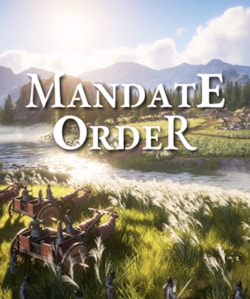
Mandate Order, developed by Digital Sky, is now available in Early Access on Steam and the Epic Games Store. The launch version offers a complete core loop of building, production, mobilization, and defense. At the same time, the team wants to be clear about what players can experience today—and what will continue to improve throughout Early Access.
A city’s preparations for war rarely begin only when enemies reach its gates.
Where the first fields are planted; whether food reaches the granary in time; whether roads connect resource sites, workshops, and storage; whether a growing population needs more housing and fuel before weapons are sent to the armory; and which areas the walls must truly protect—these choices are all made before battle, but their consequences arrive with it.
That is the experience at the heart of Mandate Order.
This is not a city-builder where players finish managing a settlement before entering a separate combat mode. Beginning with a small ancient stronghold, players gradually turn population, production, logistics, governance, and military power into one connected system capable of surviving in a fractured age.
The launch version begins with making a stronghold survive
In Mandate Order, players do not inherit a prosperous city.
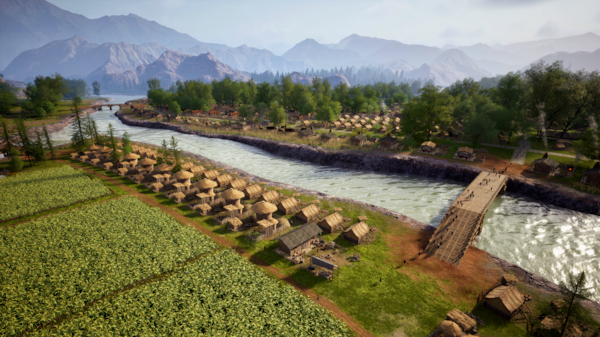
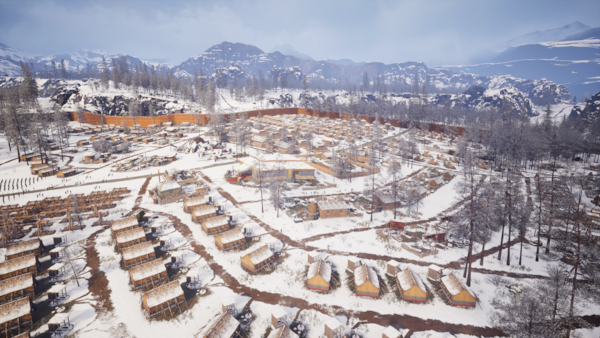
They build homes, fields, wells, storage facilities, workshops, roads, and defensive structures, while deciding how each part should connect. Workers arrive in units called Wu. They need food, housing, and water; when winter comes, they also need fuel. Public sentiment affects whether new people are willing to join the settlement, and whether the city can remain stable under sustained pressure.
Agriculture and civilian life are therefore not secondary systems outside the war.
A city without food reserves or reliable supplies may be able to build walls for a time, but it will struggle to sustain military production, organize a defense, or recover after a battle. Expansion brings more than additional buildings: it also brings more people, goods, and risks that must be supported and protected.
Resources do not automatically reach where they are needed
A city in Mandate Order is not a static arrangement of buildings.
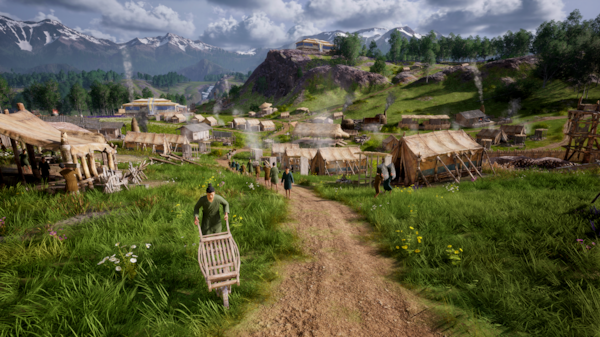
Wood, stone, food, fuel, and military equipment must be gathered, processed, stored, and transported to where they are needed next. Granaries, fuel stores, armories, general warehouses, cargo depots, and relay stations all serve different functions, while road planning and upgrades affect the efficiency of workers and supply flows.
A settlement can stagnate not because it lacks resources, but because those resources are in the wrong place.
Players need to consider whether harvests reach storage in time, whether distant resource sites can reliably support workshops, whether military equipment reaches the armory before recruitment begins, and whether a transport network that once worked has become a bottleneck as the city grows.
The game can be complex, but its problems should be visible, understandable, and solvable.
The army comes from the people who once worked in the city
When danger arrives, workers can be recruited into infantry, archer, and chariot units.
But an army is never created from nothing. Weapons must be produced and stored in advance, while the workers being recruited were previously farming, hauling materials, constructing buildings, and keeping production running. Drawing more people into the defense may place the city’s logistics and output under greater strain.
Every recruitment decision becomes a trade-off.
Should players protect food production and supplies first, or expand the military early? Should they concentrate forces behind a compact defensive line, or build wider to leave room for future growth? Once troops have marched out, are there still enough people left to keep the city functioning?
The Early Access launch version supports freeform roads and walls, with gates, towers, and defensive structures placed along key connection points. Archers can defend from the walls, while line-drawing commands allow players to quickly direct unit movement and formations.
Battle is not an interruption to city management. It is the test of every building decision made before it.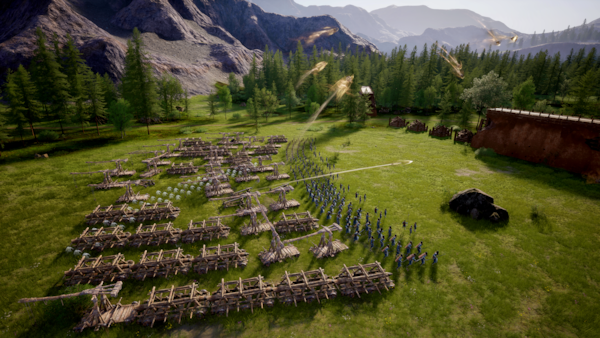
Making ancient Chinese history part of strategy
Mandate Order’s ancient Chinese setting is intended to be more than visual dressing.
The launch version includes retainers, the Hundred Schools of Thought, national policies, and diplomacy. Different retainers can contribute to city administration, agriculture, production, military affairs, or diplomacy, shaping players’ development paths and strategic trade-offs.
Rather than following a single optimal build order, players must work with the conditions and people available to them, deciding whether their city should rely more on production, public stability, military strength, diplomacy, or expansion to establish itself.
The team’s goal is for the historical setting to give the game’s systems a meaningful foundation, rather than remain only in its architecture and terminology.
The beginning of Early Access—not a claim of completion
Mandate Order’s Early Access launch version already connects city building, agriculture, population needs, production logistics, retainers, diplomacy, recruitment, fortifications, and warfare into one core experience.
It is not a finished 1.0 release.
Onboarding and information clarity, performance and stability, logistics and pathfinding, wall and gate behavior, UI readability, and balance will remain important post-launch priorities. Future development will include new maps, building upgrades and decorative construction, deeper agriculture and livestock systems, and additional defensive and combat content. Specific features and timing may continue to change in response to development progress, performance work, and player feedback.
The team does not want to present future content as though it were already available today.
But from today, players can begin with a single stronghold and face Mandate Order’s central question for themselves:
When food, labor, logistics, and warfare all depend on one another, can you build a city that truly survives?
About Mandate Order
Mandate Order is an ancient Chinese war city-builder developed by Digital Sky. Players begin with a frontier settlement and gradually develop it into a state capable of producing, sustaining itself, governing, mobilizing, and defending against threats. Freeform building, visible logistics, seasonal agriculture, population needs, retainers, diplomacy, fortifications, and large-scale battles are designed to function as one interconnected strategy system.
Mandate Order is now available in Early Access on Steam and the Epic Games Store, with support for 12 languages. The game is priced at $19.99 USD globally, with a 15% launch discount available for the first two weeks. In China, it is priced at RMB 68 with the same launch discount.
Steam
Official X
Official website
A city’s preparations for war rarely begin only when enemies reach its gates.
Where the first fields are planted; whether food reaches the granary in time; whether roads connect resource sites, workshops, and storage; whether a growing population needs more housing and fuel before weapons are sent to the armory; and which areas the walls must truly protect—these choices are all made before battle, but their consequences arrive with it.
That is the experience at the heart of Mandate Order.
This is not a city-builder where players finish managing a settlement before entering a separate combat mode. Beginning with a small ancient stronghold, players gradually turn population, production, logistics, governance, and military power into one connected system capable of surviving in a fractured age.
The launch version begins with making a stronghold survive
In Mandate Order, players do not inherit a prosperous city.
They build homes, fields, wells, storage facilities, workshops, roads, and defensive structures, while deciding how each part should connect. Workers arrive in units called Wu. They need food, housing, and water; when winter comes, they also need fuel. Public sentiment affects whether new people are willing to join the settlement, and whether the city can remain stable under sustained pressure.
Agriculture and civilian life are therefore not secondary systems outside the war.
A city without food reserves or reliable supplies may be able to build walls for a time, but it will struggle to sustain military production, organize a defense, or recover after a battle. Expansion brings more than additional buildings: it also brings more people, goods, and risks that must be supported and protected.
Resources do not automatically reach where they are needed
A city in Mandate Order is not a static arrangement of buildings.
Wood, stone, food, fuel, and military equipment must be gathered, processed, stored, and transported to where they are needed next. Granaries, fuel stores, armories, general warehouses, cargo depots, and relay stations all serve different functions, while road planning and upgrades affect the efficiency of workers and supply flows.
A settlement can stagnate not because it lacks resources, but because those resources are in the wrong place.
Players need to consider whether harvests reach storage in time, whether distant resource sites can reliably support workshops, whether military equipment reaches the armory before recruitment begins, and whether a transport network that once worked has become a bottleneck as the city grows.
The game can be complex, but its problems should be visible, understandable, and solvable.
The army comes from the people who once worked in the city
When danger arrives, workers can be recruited into infantry, archer, and chariot units.
But an army is never created from nothing. Weapons must be produced and stored in advance, while the workers being recruited were previously farming, hauling materials, constructing buildings, and keeping production running. Drawing more people into the defense may place the city’s logistics and output under greater strain.
Every recruitment decision becomes a trade-off.
Should players protect food production and supplies first, or expand the military early? Should they concentrate forces behind a compact defensive line, or build wider to leave room for future growth? Once troops have marched out, are there still enough people left to keep the city functioning?
The Early Access launch version supports freeform roads and walls, with gates, towers, and defensive structures placed along key connection points. Archers can defend from the walls, while line-drawing commands allow players to quickly direct unit movement and formations.
Battle is not an interruption to city management. It is the test of every building decision made before it.
Making ancient Chinese history part of strategy
Mandate Order’s ancient Chinese setting is intended to be more than visual dressing.
The launch version includes retainers, the Hundred Schools of Thought, national policies, and diplomacy. Different retainers can contribute to city administration, agriculture, production, military affairs, or diplomacy, shaping players’ development paths and strategic trade-offs.
Rather than following a single optimal build order, players must work with the conditions and people available to them, deciding whether their city should rely more on production, public stability, military strength, diplomacy, or expansion to establish itself.
The team’s goal is for the historical setting to give the game’s systems a meaningful foundation, rather than remain only in its architecture and terminology.
The beginning of Early Access—not a claim of completion
Mandate Order’s Early Access launch version already connects city building, agriculture, population needs, production logistics, retainers, diplomacy, recruitment, fortifications, and warfare into one core experience.
It is not a finished 1.0 release.
Onboarding and information clarity, performance and stability, logistics and pathfinding, wall and gate behavior, UI readability, and balance will remain important post-launch priorities. Future development will include new maps, building upgrades and decorative construction, deeper agriculture and livestock systems, and additional defensive and combat content. Specific features and timing may continue to change in response to development progress, performance work, and player feedback.
The team does not want to present future content as though it were already available today.
But from today, players can begin with a single stronghold and face Mandate Order’s central question for themselves:
When food, labor, logistics, and warfare all depend on one another, can you build a city that truly survives?
About Mandate Order
Mandate Order is an ancient Chinese war city-builder developed by Digital Sky. Players begin with a frontier settlement and gradually develop it into a state capable of producing, sustaining itself, governing, mobilizing, and defending against threats. Freeform building, visible logistics, seasonal agriculture, population needs, retainers, diplomacy, fortifications, and large-scale battles are designed to function as one interconnected strategy system.
Mandate Order is now available in Early Access on Steam and the Epic Games Store, with support for 12 languages. The game is priced at $19.99 USD globally, with a 15% launch discount available for the first two weeks. In China, it is priced at RMB 68 with the same launch discount.
Steam
Official X
Official website