Palworld recently reached a peak of around 960,000 concurrent players on Steam following a major update. The signal is clear: players may return, but they are not waiting only for a list of future features—they are waiting to see meaningful change they can actually feel.
A long roadmap is one of the most common ways Early Access games communicate with their communities.
New maps, new systems, new units, new modes—these things matter. They tell players that the game still has room to grow.
But for people who have already played, a roadmap can only answer what may arrive in the future. It rarely answers the more immediate question:
Has the problem I ran into last time actually been improved?
Players support a game that is still in development not because they expect everything to become richer automatically, but because they can see that the team understands where the problems are—and is turning feedback into concrete changes to the experience.
That is both the difficulty and the real value of Early Access.

Players do not mind waiting. They mind returning to the same problems.
A drop in player numbers after launch does not necessarily mean a game has lost its value.
For strategy, simulation, and building games in particular, many players experience the core loop, form an opinion, discover what they enjoy and what feels frustrating, then step away until there is a clear reason to return.
The problem is not that players pause. The problem is whether the game gives them a reason to come back.
That reason does not always need to be a new map or an entirely new system. Sometimes, the most meaningful improvement is that a problem which once felt confusing, unclear, or impossible to solve has finally been made understandable.
For example:

In a war city-builder, clarity is content too
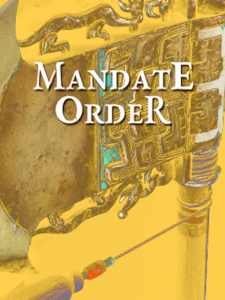
Mandate Order, which enters Early Access on August 12, is built around interconnected systems.
Players freely plan their settlements while managing farming, production, storage, and transport. They must also respond to population growth, seasonal change, resource reserves, and public needs. War is not a separate mode that begins after the city is complete—it tests every earlier decision in construction and planning.
That means updates to Mandate Order should not be understood only as “adding another system.”
More importantly, they should help players clearly understand the consequences of their choices.
Several recent adjustments in playtesting are designed around exactly this principle.
The recruitment system has been reworked to clarify the relationship between armouries, equipment, and labour. Equipment must physically reach the armoury before it can be used for recruitment. Players can prioritise workers who are closer to the armoury for faster assembly, or select workers whose absence will cause less disruption to ongoing production.
As a result, “how many soldiers should I recruit?” becomes more than a number. It becomes a city-management decision with visible consequences.
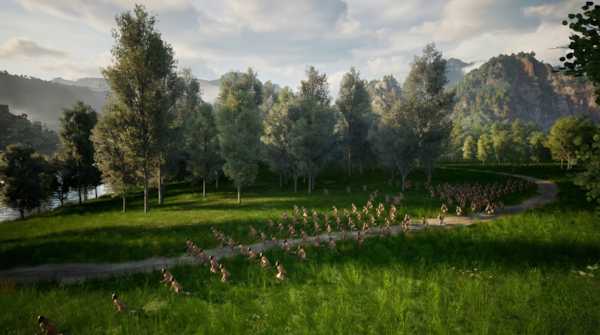
The invasion system is also no longer simply a timed wave of enemies. Players can adjust when pressure begins and how often it appears at the start of a game. When bandits demand resources, players can pay—or refuse. But refusal has consequences: enemies may target the city’s more valuable storage buildings, damaging facilities and looting resources along the way.
This turns warehouse placement, road layouts, walls, and troop positioning into real strategic decisions.
These changes may be less easily summarised than “a new unit has been added.” But they go closer to the foundation of what makes a war city-builder work: players need to understand why they failed, and how a different plan can lead to a better outcome next time.
An update earns trust when it gives problems an answer
For an Early Access game, the most persuasive update does not simply say, “We optimised the game.”
It shows players:
Together, these improvements point toward the same idea: complexity is not the goal. The pleasure of a strategy game comes when complex systems can be understood, anticipated, and mastered.
Players do not need to understand every rule of a state in their first session. But they do need to feel that their questions will be answered, their choices will receive clear feedback, and their city can gradually become a state they truly understand and know how to lead.
A roadmap can describe the future.
But only continuous, specific, and tangible updates can make players believe that the road is genuinely moving forward.

About Mandate Order
Mandate Order is an ancient Chinese war city-building simulation set during the Spring and Autumn and Warring States period. Players begin with a frontier settlement and build it into a state through city construction, farming, production, logistics, public needs, retainers, diplomacy, recruitment, city defense, and large-scale battles. Every road, storehouse, wall, and military decision can shape whether a growing city survives — and eventually claims its place in a fractured world. Mandate Order enters Early Access on Steam and Epic Games Store on August 12, 2026. The game supports 12 languages and will be priced at US$19.99 internationally , with a 15% launch discount for the first two weeks.
Steam
Official X
Official website
New maps, new systems, new units, new modes—these things matter. They tell players that the game still has room to grow.
But for people who have already played, a roadmap can only answer what may arrive in the future. It rarely answers the more immediate question:
Has the problem I ran into last time actually been improved?
Players support a game that is still in development not because they expect everything to become richer automatically, but because they can see that the team understands where the problems are—and is turning feedback into concrete changes to the experience.
That is both the difficulty and the real value of Early Access.
Players do not mind waiting. They mind returning to the same problems.
A drop in player numbers after launch does not necessarily mean a game has lost its value.
For strategy, simulation, and building games in particular, many players experience the core loop, form an opinion, discover what they enjoy and what feels frustrating, then step away until there is a clear reason to return.
The problem is not that players pause. The problem is whether the game gives them a reason to come back.
That reason does not always need to be a new map or an entirely new system. Sometimes, the most meaningful improvement is that a problem which once felt confusing, unclear, or impossible to solve has finally been made understandable.
For example:
- Why can a city produce weapons but still fail to recruit soldiers?
- When an invasion begins, what will the enemy attack—and why does the city fail to defend itself?
- How do mountains, passes, and buildable areas on the map shape a particular settlement?
- Why are resources still not reaching the places that need them, even after building warehouses, roads, and workshops?
In a war city-builder, clarity is content too
Mandate Order, which enters Early Access on August 12, is built around interconnected systems.
Players freely plan their settlements while managing farming, production, storage, and transport. They must also respond to population growth, seasonal change, resource reserves, and public needs. War is not a separate mode that begins after the city is complete—it tests every earlier decision in construction and planning.
That means updates to Mandate Order should not be understood only as “adding another system.”
More importantly, they should help players clearly understand the consequences of their choices.
Several recent adjustments in playtesting are designed around exactly this principle.
The recruitment system has been reworked to clarify the relationship between armouries, equipment, and labour. Equipment must physically reach the armoury before it can be used for recruitment. Players can prioritise workers who are closer to the armoury for faster assembly, or select workers whose absence will cause less disruption to ongoing production.
As a result, “how many soldiers should I recruit?” becomes more than a number. It becomes a city-management decision with visible consequences.
The invasion system is also no longer simply a timed wave of enemies. Players can adjust when pressure begins and how often it appears at the start of a game. When bandits demand resources, players can pay—or refuse. But refusal has consequences: enemies may target the city’s more valuable storage buildings, damaging facilities and looting resources along the way.
This turns warehouse placement, road layouts, walls, and troop positioning into real strategic decisions.
These changes may be less easily summarised than “a new unit has been added.” But they go closer to the foundation of what makes a war city-builder work: players need to understand why they failed, and how a different plan can lead to a better outcome next time.
An update earns trust when it gives problems an answer
For an Early Access game, the most persuasive update does not simply say, “We optimised the game.”
It shows players:
- What the problem was;
- What has specifically changed;
- Which decision will now feel clearer, smoother, or more meaningful when they return.
Together, these improvements point toward the same idea: complexity is not the goal. The pleasure of a strategy game comes when complex systems can be understood, anticipated, and mastered.
Players do not need to understand every rule of a state in their first session. But they do need to feel that their questions will be answered, their choices will receive clear feedback, and their city can gradually become a state they truly understand and know how to lead.
A roadmap can describe the future.
But only continuous, specific, and tangible updates can make players believe that the road is genuinely moving forward.
About Mandate Order
Mandate Order is an ancient Chinese war city-building simulation set during the Spring and Autumn and Warring States period. Players begin with a frontier settlement and build it into a state through city construction, farming, production, logistics, public needs, retainers, diplomacy, recruitment, city defense, and large-scale battles. Every road, storehouse, wall, and military decision can shape whether a growing city survives — and eventually claims its place in a fractured world. Mandate Order enters Early Access on Steam and Epic Games Store on August 12, 2026. The game supports 12 languages and will be priced at US$19.99 internationally , with a 15% launch discount for the first two weeks.
Steam
Official X
Official website