This ancient Chinese war city-builder turns farming, harvest, storage, fuel, and winter preparation into part of city survival.
In spring, the player opens the first field.
At first, it looks like a familiar beginning: choose a piece of land, assign workers to cultivate it, and wait for crops to grow. But in Mandate Order, that decision does not only affect a food number on the interface. It becomes a care problem in summer, a harvest result in autumn, and a survival question in winter.
If water cannot keep up, the expected yield may fall.
If fertility declines, repeated planting puts more pressure on the land.
If workers are busy with construction, hauling, or conscription, field care may slow down.
If the autumn harvest is too small, food, morale, and city stability all come under pressure in winter.That is how Mandate Order treats seasons.
Spring, summer, autumn, and winter are not just weather changes or visual atmosphere. They form a time pressure system. Choices made in spring reveal problems in summer, deliver results in autumn, and are tested in winter.
Developed by Digital Sky, Mandate Order is an ancient Chinese war city-builder set during the Spring and Autumn and Warring States era. The game is planned for a Q3 2026 launch window on Steam. Players begin with a frontier settlement and build homes, wells, fields, warehouses, workshops, armories, walls, and defensive structures while managing farming, logistics, workers, conscription, invasions, and defense.
In this system, war is not the only threat.
Before a city can fight, it first has to survive the year.

Spring Is Not Just a Planting Animation
In many city-builders, farms are basic resource buildings. Players build fields, wait for food, then use that food to support population growth and expansion.
Mandate Order treats farming as a seasonal process.
In spring, players decide where to open fields. Recent changes merge plowing and sowing into a single cultivation behavior, while newly built fields default to millet, reducing the chance that players build farmland but forget to assign a crop.
But the important part is not only placing the field.
A field’s initial fertility depends on the land chosen when it is built. Planting consumes fertility, while fallow periods can restore it. That means players cannot only look for empty space. They need to consider whether that land can support long-term food production.
Where a field is placed creates several later questions.
Is it close enough to water?
Can workers reach it in time?
Is there storage nearby for the harvest?
If repeated planting reduces fertility, should it rest next year?
If too many fields are opened in spring, will there be enough labor to care for them in summer?A spring decision may look like a small early-game step.
In Mandate Order, it already begins shaping the pressure the city will face for the rest of the year.
Summer Is Where Care Becomes Pressure
Planting does not mean the player can simply wait for harvest.
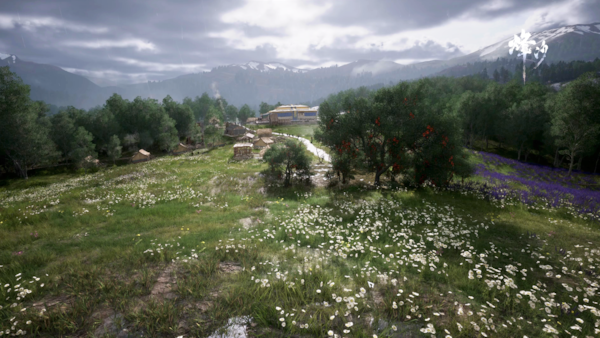
In summer, fields enter the care phase. Water, fertilizer water, and weeding all affect crop maturity and final yield. Players can also see expected autumn output during this stage.
That matters because food risk does not suddenly appear in autumn.
If water is short, players can see the expected yield fall earlier.
If fertilizer water is insufficient, growth suffers.
If weeding is delayed, final output may decline.
If workers are occupied elsewhere, field care may fall in priority.Summer becomes a season of adjustment.
Should the player add more water supply? Reassign workers? Delay construction and return labor to the fields? If war is approaching, can the city afford conscription that interrupts summer care?
Farming in Mandate Order is not a static output building. It is a production chain that other city systems can disturb.
Workers building walls are not caring for fields.
Workers hauling materials may slow farm work.
Workers conscripted into soldiers can leave summer farming understaffed.This connects farming and war instead of keeping them separate.
A city’s ability to fight first depends on whether its agricultural base can hold.

Autumn Is a Test, Not Just a Reward
When autumn arrives, fields are harvested.
In some games, harvest is mostly a reward: resources arrive, and the player moves on. In Mandate Order, autumn is closer to a test. The land chosen in spring, the care given in summer, the allocation of labor, and the handling of fertility all turn into a concrete result.
Even after the harvest, food does not solve everything automatically.
It has to be carried by workers.
It has to enter storage.
It has to support daily population needs.
It has to sustain later expansion.
It may also affect whether the city has enough surplus to maintain morale.If storage is poorly placed, the harvest itself can create transport pressure.
If population has grown too quickly, a large harvest may still disappear fast.
If players want to prepare for war after autumn, food reserves also matter.Autumn is not the end of farming.
It converts land, labor, and planning into the survival conditions of the next season.
The question is not only how much food the city harvested.
Can that food reach storage?
Can it feed the population?
Can it last through winter?

Can it still support construction, conscription, and defense?Winter Is Not a Pause. It Is the Reckoning.
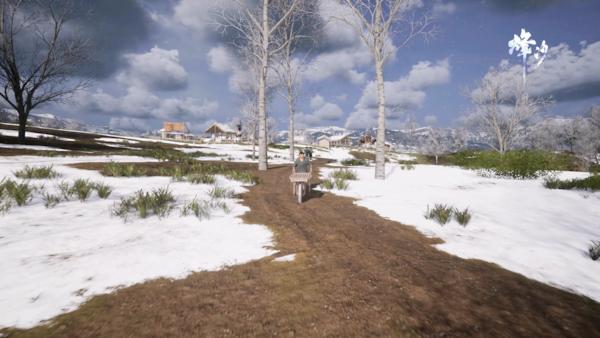
In many city-builders, winter can become a visual change: snow falls, the map turns white, and the city continues.
In Mandate Order, winter is more like the reckoning for earlier seasons.
Fields are no longer the immediate source of output. Reserves matter. Food, fuel, and worker needs all affect city stability.
Morale in Mandate Order is tied to needs such as food, housing, water, fuel, surplus food, and rituals. If fuel is insufficient, especially in winter, stability can fall sharply. If morale drops too low, workers may leave, and more serious problems can follow.
Winter forces players to look back.
Were enough fields opened in spring?
Were crops cared for in summer?
Did the autumn harvest reach storage?
Did warehouses and transport handle the harvest?
Was fuel prepared in advance?
Did population growth exceed what the city could support?If preparation was weak, winter magnifies the problem.
Worse still, external threats do not necessarily wait for next year.
Invasions, bandit demands, wall construction, and armory preparation can all overlap with winter pressure. Players may have to decide whether to hand over resources, conscript workers, or keep building defenses while food and fuel are already tight.
Winter is not only a season.
It is a test of the city’s ability to absorb pressure.
Seasons Give the City a Sense of Time
The most interesting part of Mandate Order’s seasons is not that the map changes.
It is that the city gains a sense of time.
Spring is not something players can always fix later.
Summer is not a harmless transition.
Autumn is not only a payout.
Winter is not a pause button.Each season changes the player’s priorities.
In spring, players decide where to cultivate and how to prepare labor.
In summer, they watch expected yield and manage water, fertilizer, and weeding.
In autumn, they handle harvest, storage, and food distribution.
In winter, they face reserves, fuel, morale, and possible external threats.The city no longer runs only on whether there are enough resources.
It also depends on whether the player has managed time well.
When should fields expand?
When should land rest?
When should the city grow?
When should it store?
When should workers be conscripted?
When should the city stop expanding and prepare for winter?These questions form Mandate Order’s survival rhythm.
Before War, There Is Farming
The most visible parts of Mandate Order may be walls, chariots, archers, and large-scale battles.
But before those battles, players first have to answer a more basic question: how does this city survive?
Where does food come from?
Can workers be fed?
Is the autumn harvest enough?
Is there enough fuel for winter?
Will population growth overwhelm supply?
If war approaches, does the city still have the strength to conscript and defend itself?That is what makes Mandate Order worth discussing as a war city-builder.
It does not place farming outside war. It puts fields, seasons, and storage into the preparation chain before war. A field opened in spring, a care decision made in summer, a harvest gathered in autumn, and fuel prepared for winter can all shape whether the city can support a battle later.
Here, seasons are not background.
They are the rhythm of survival.
And what players manage is not only buildings and armies, but a city trying to breathe with time, land, and the pressure of war.
About Mandate Order
Mandate Order is an ancient Chinese war city-builder developed by Digital Sky, an independent studio based in Chengdu, China. Set during the Spring and Autumn and Warring States era, the game starts players with a small frontier settlement and asks them to develop it into a functioning military stronghold. Players build homes, wells, fields, warehouses, workshops, barracks, armories, walls, and defensive structures while managing resources, population needs, logistics, retainers, diplomacy, and battlefield tactics. The game is currently listed on Steam, supports 12 languages, and is planned for a Q3 2026 launch window.
Steam
Official X
Official website
In spring, the player opens the first field.
At first, it looks like a familiar beginning: choose a piece of land, assign workers to cultivate it, and wait for crops to grow. But in Mandate Order, that decision does not only affect a food number on the interface. It becomes a care problem in summer, a harvest result in autumn, and a survival question in winter.
If water cannot keep up, the expected yield may fall.
If fertility declines, repeated planting puts more pressure on the land.
If workers are busy with construction, hauling, or conscription, field care may slow down.
If the autumn harvest is too small, food, morale, and city stability all come under pressure in winter.That is how Mandate Order treats seasons.
Spring, summer, autumn, and winter are not just weather changes or visual atmosphere. They form a time pressure system. Choices made in spring reveal problems in summer, deliver results in autumn, and are tested in winter.
Developed by Digital Sky, Mandate Order is an ancient Chinese war city-builder set during the Spring and Autumn and Warring States era. The game is planned for a Q3 2026 launch window on Steam. Players begin with a frontier settlement and build homes, wells, fields, warehouses, workshops, armories, walls, and defensive structures while managing farming, logistics, workers, conscription, invasions, and defense.
In this system, war is not the only threat.
Before a city can fight, it first has to survive the year.
Spring Is Not Just a Planting Animation
In many city-builders, farms are basic resource buildings. Players build fields, wait for food, then use that food to support population growth and expansion.
Mandate Order treats farming as a seasonal process.
In spring, players decide where to open fields. Recent changes merge plowing and sowing into a single cultivation behavior, while newly built fields default to millet, reducing the chance that players build farmland but forget to assign a crop.
But the important part is not only placing the field.
A field’s initial fertility depends on the land chosen when it is built. Planting consumes fertility, while fallow periods can restore it. That means players cannot only look for empty space. They need to consider whether that land can support long-term food production.
Where a field is placed creates several later questions.
Is it close enough to water?
Can workers reach it in time?
Is there storage nearby for the harvest?
If repeated planting reduces fertility, should it rest next year?
If too many fields are opened in spring, will there be enough labor to care for them in summer?A spring decision may look like a small early-game step.
In Mandate Order, it already begins shaping the pressure the city will face for the rest of the year.
Summer Is Where Care Becomes Pressure
Planting does not mean the player can simply wait for harvest.
In summer, fields enter the care phase. Water, fertilizer water, and weeding all affect crop maturity and final yield. Players can also see expected autumn output during this stage.
That matters because food risk does not suddenly appear in autumn.
If water is short, players can see the expected yield fall earlier.
If fertilizer water is insufficient, growth suffers.
If weeding is delayed, final output may decline.
If workers are occupied elsewhere, field care may fall in priority.Summer becomes a season of adjustment.
Should the player add more water supply? Reassign workers? Delay construction and return labor to the fields? If war is approaching, can the city afford conscription that interrupts summer care?
Farming in Mandate Order is not a static output building. It is a production chain that other city systems can disturb.
Workers building walls are not caring for fields.
Workers hauling materials may slow farm work.
Workers conscripted into soldiers can leave summer farming understaffed.This connects farming and war instead of keeping them separate.
A city’s ability to fight first depends on whether its agricultural base can hold.
Autumn Is a Test, Not Just a Reward
When autumn arrives, fields are harvested.
In some games, harvest is mostly a reward: resources arrive, and the player moves on. In Mandate Order, autumn is closer to a test. The land chosen in spring, the care given in summer, the allocation of labor, and the handling of fertility all turn into a concrete result.
Even after the harvest, food does not solve everything automatically.
It has to be carried by workers.
It has to enter storage.
It has to support daily population needs.
It has to sustain later expansion.
It may also affect whether the city has enough surplus to maintain morale.If storage is poorly placed, the harvest itself can create transport pressure.
If population has grown too quickly, a large harvest may still disappear fast.
If players want to prepare for war after autumn, food reserves also matter.Autumn is not the end of farming.
It converts land, labor, and planning into the survival conditions of the next season.
The question is not only how much food the city harvested.
Can that food reach storage?
Can it feed the population?
Can it last through winter?
Can it still support construction, conscription, and defense?Winter Is Not a Pause. It Is the Reckoning.
In many city-builders, winter can become a visual change: snow falls, the map turns white, and the city continues.
In Mandate Order, winter is more like the reckoning for earlier seasons.
Fields are no longer the immediate source of output. Reserves matter. Food, fuel, and worker needs all affect city stability.
Morale in Mandate Order is tied to needs such as food, housing, water, fuel, surplus food, and rituals. If fuel is insufficient, especially in winter, stability can fall sharply. If morale drops too low, workers may leave, and more serious problems can follow.
Winter forces players to look back.
Were enough fields opened in spring?
Were crops cared for in summer?
Did the autumn harvest reach storage?
Did warehouses and transport handle the harvest?
Was fuel prepared in advance?
Did population growth exceed what the city could support?If preparation was weak, winter magnifies the problem.
Worse still, external threats do not necessarily wait for next year.
Invasions, bandit demands, wall construction, and armory preparation can all overlap with winter pressure. Players may have to decide whether to hand over resources, conscript workers, or keep building defenses while food and fuel are already tight.
Winter is not only a season.
It is a test of the city’s ability to absorb pressure.
Seasons Give the City a Sense of Time
The most interesting part of Mandate Order’s seasons is not that the map changes.
It is that the city gains a sense of time.
Spring is not something players can always fix later.
Summer is not a harmless transition.
Autumn is not only a payout.
Winter is not a pause button.Each season changes the player’s priorities.
In spring, players decide where to cultivate and how to prepare labor.
In summer, they watch expected yield and manage water, fertilizer, and weeding.
In autumn, they handle harvest, storage, and food distribution.
In winter, they face reserves, fuel, morale, and possible external threats.The city no longer runs only on whether there are enough resources.
It also depends on whether the player has managed time well.
When should fields expand?
When should land rest?
When should the city grow?
When should it store?
When should workers be conscripted?
When should the city stop expanding and prepare for winter?These questions form Mandate Order’s survival rhythm.
Before War, There Is Farming
The most visible parts of Mandate Order may be walls, chariots, archers, and large-scale battles.
But before those battles, players first have to answer a more basic question: how does this city survive?
Where does food come from?
Can workers be fed?
Is the autumn harvest enough?
Is there enough fuel for winter?
Will population growth overwhelm supply?
If war approaches, does the city still have the strength to conscript and defend itself?That is what makes Mandate Order worth discussing as a war city-builder.
It does not place farming outside war. It puts fields, seasons, and storage into the preparation chain before war. A field opened in spring, a care decision made in summer, a harvest gathered in autumn, and fuel prepared for winter can all shape whether the city can support a battle later.
Here, seasons are not background.
They are the rhythm of survival.
And what players manage is not only buildings and armies, but a city trying to breathe with time, land, and the pressure of war.
About Mandate Order
Mandate Order is an ancient Chinese war city-builder developed by Digital Sky, an independent studio based in Chengdu, China. Set during the Spring and Autumn and Warring States era, the game starts players with a small frontier settlement and asks them to develop it into a functioning military stronghold. Players build homes, wells, fields, warehouses, workshops, barracks, armories, walls, and defensive structures while managing resources, population needs, logistics, retainers, diplomacy, and battlefield tactics. The game is currently listed on Steam, supports 12 languages, and is planned for a Q3 2026 launch window.
Steam
Official X
Official website