Food, labor, seasons, and harvests can make war feel less like a separate battle system and more like the result of an entire city’s preparation.
In many war strategy games, farms are among the quietest buildings.
They do not take hits like walls. They do not produce soldiers like barracks. They do not create the immediate drama of a battlefield. Players place them, watch the food number rise, and use that food to support population, armies, or expansion.
That approach is clear, and it works.
But it can also create a gap. If farming is only a stable background source of food, war can become detached from city management.
The front line fights, while the rear supplies numbers.
Armies charge, while food remains a cost.
The city grows larger, but the farming decisions may not grow much deeper.In war strategy games, farming can do more than that.
It can become the first layer of pressure before war begins: whether fields can be opened in spring, whether they can be cared for in summer, whether autumn produces enough food, and whether the city can survive winter with enough reserves. If those problems are not handled, the city may already be fragile before enemies arrive.
Mandate Order is trying to bring farming back into that preparation chain.
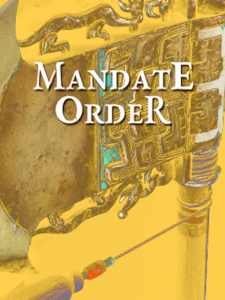
Developed by Digital Sky, Mandate Order is an ancient Chinese war city-builder set during the Spring and Autumn and Warring States era. The game is planned for a Q3 2026 launch window on Steam. Instead of only asking players to build cities, raise armies, construct walls, and fight enemies, it starts with a frontier settlement and asks whether that city can survive between farming, labor, logistics, conscription, storage, and defense.
Here, farming is not background before battle.
It is one of the first questions the city must answer.
Farms Should Not Only Be a Rising Food Number
When a war strategy game treats food as a simple number, the player’s judgment often becomes simple as well: is there enough food, can population grow, and can soldiers be supported?
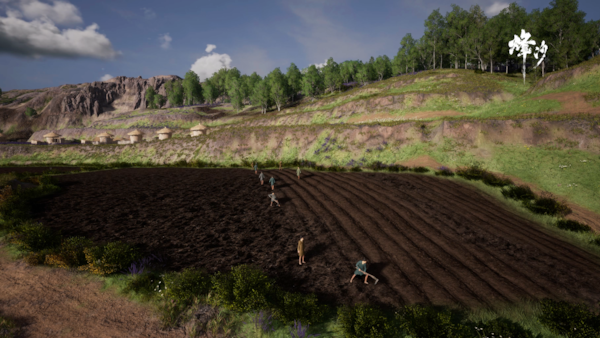
In Mandate Order, fields are not stable food generators placed once and forgotten.
They follow a seasonal rhythm: spring cultivation, summer care, and autumn harvest. Recent changes merge plowing and sowing into a single cultivation behavior, while newly built fields default to millet, reducing cases where players build farmland but forget to assign a crop.
Fertility also affects output. A field’s initial fertility depends on the land selected when it is built. Planting consumes fertility, while fallow periods can restore it.
That means players are not simply covering the map with farms.
Where the field is placed matters.
Is the land fertile enough?
Is it close to water?
Is there storage nearby for the harvest?
Will repeated planting reduce fertility?
Should the land be planted again, or left fallow to recover?These questions turn farming from an economic background system into part of long-term city survival.
Overused land can weaken future output.
Fields placed far from water and storage create care and transport pressure.
Short-term expansion without time for recovery can make the agricultural base less stable.Farming in a war strategy game does not need to become overwhelming micromanagement.
But it should remind players that food is not a number appearing from nowhere. It is the result of land, water, labor, and time.
Summer Lets Players See the Problem Early
The most interesting part of farming should not only be the autumn payout.
If players discover a food shortage only at harvest, it may already be too late. Stronger strategy pressure comes from showing risk during the process, giving players a chance to adjust before the result arrives.
Mandate Order’s summer care phase serves that role.
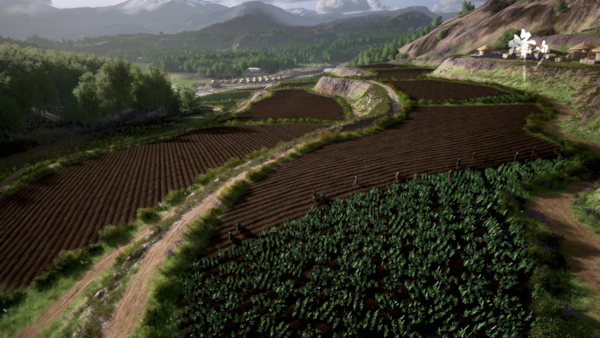
Water, fertilizer water, and weeding all affect crop maturity and final output. More importantly, the game shows expected autumn yield during summer.
That makes agricultural risk visible earlier.
If water cannot keep up, the expected harvest falls.
If fertilizer water is insufficient, growth suffers.
If weeding is delayed, crops are affected.
If workers are busy building roads, expanding storage, or hauling materials, field care may lose priority.This is different from treating food as an automatically rising background number.
Mandate Order turns food into a process with feedback and early warning. Players are not just waiting for autumn. They are deciding in summer whether to add water supply, reassign workers, or delay construction to bring labor back to the fields.
It also makes war pressure appear earlier.
Enemies may not have arrived. Armies may not have gathered. But if summer care is already failing, the city’s future war capacity is already under pressure. Without stable food, population, morale, expansion, and conscription all become harder to sustain.
Farming and War Share the Same Workers
For farming to matter in a war strategy game, food itself is only part of the equation. Labor matters just as much.
In Mandate Order, population is organized around the “Wu,” with each Wu representing roughly five workers. Workers gather resources, haul goods, construct buildings, farm fields, and produce items in workshops. Buildings do not simply run after being placed; they need assigned Wu before they begin working.
This naturally connects farming to war.
The same workers who care for fields are also potential soldiers.
Assign more Wu to fields, and food production becomes more stable, but other construction and production may slow down.
Send workers to build walls, haul materials, or work in workshops, and field care may suffer.
Conscript workers before an attack, and farms, workshops, and logistics all lose part of their labor force.Recent conscription changes reinforce this connection. Without an armory, players cannot conscript. Only equipment stored inside the armory counts toward conscription; weapons in transit or lying in ground resource piles no longer count. Once a rally point is confirmed, conscripted workers immediately stop their current tasks, and any goods they were carrying are left on the ground.
That means farming and war are not separate systems.
Players cannot only ask:
How much food do I have?
How many soldiers can I raise?They also have to ask:
What are these workers doing now?
Will conscription interrupt summer farming?
Can the walls hold if workers stay in the fields?
If workers keep farming, will the army gather too late?When labor becomes the shared resource between agriculture and war, farming stops being background.
It becomes part of military decision-making.
Harvest and Storage Decide Whether the City Can Afford War
Food in war strategy games is often treated as the cost of supporting armies.
In Mandate Order, food also affects the stability of the entire city.
Autumn harvest is not the end of the farming system. It begins the next pressure cycle.
Food has to be carried by workers. It has to enter storage. It has to feed the population. It can support expansion. It can also affect whether the city has enough surplus to maintain morale. According to the play manual, morale is affected by needs such as food, housing, water, fuel, surplus food, and rituals. If morale falls too low, workers may leave, and rebellion can occur.
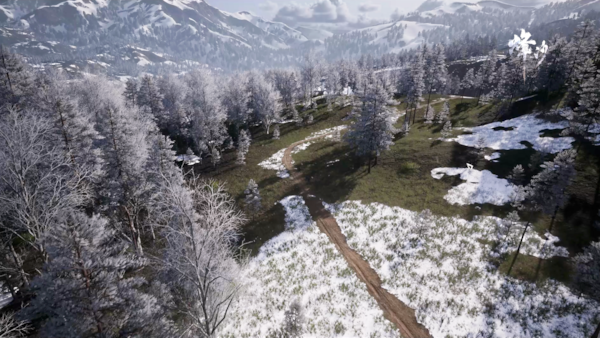
Winter makes the results of earlier seasons more serious.
If the autumn harvest is too small, food reserves tighten.
If fuel is insufficient, stability suffers.
If population grows too quickly, food is consumed faster.
If enemies invade or bandits demand supplies at the same time, players may have to choose between protecting reserves, maintaining morale, and preparing for war.This is what harvest and winter storage can mean inside a war city-builder.
Food is not just an autumn reward.
It is the condition for winter stability, future expansion, and military readiness.If a city is already weakened by food, fuel, and morale problems in winter, its ability to fight is reduced even if walls still stand and the armory holds some equipment.
Before a city can fight, it has to remain stable.
Farming Gives War a Longer Lead-Up
In many war strategy games, tension begins when enemies appear.
The army approaches. The player moves troops, forms lines, and fights. Victory or defeat becomes visible on the battlefield.
But when farming, seasons, and food reserves are tied to preparation, war has a much longer lead-up.
A spring field affects autumn food.
Summer care affects winter reserves.
Labor allocation affects both farming and conscription.
Storage and transport decide whether food enters the city’s daily cycle.
Winter food and fuel affect morale and stability.All of this happens before the enemy arrives.
It changes how players understand war.
War is no longer only about unit counters, formations, and battle stats at the front line.
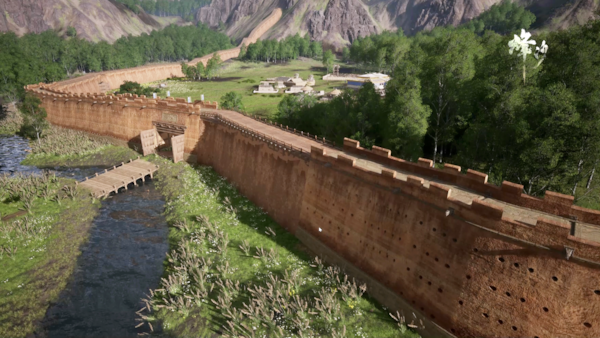
It is also about whether the entire city was ready during the seasons before it.The most visible parts of Mandate Order may be walls, chariots, archers, and large-scale battles. But what makes it worth discussing is how it pushes war preparation back into fields, water, workers, storage, and winter reserves.
When players decide where to open fields in spring, they are already deciding whether the city will have food to support population and war later.
When they pull workers away from summer farming to build walls, they are also affecting the autumn harvest.
When they protect surplus food, fuel, and morale in winter, they are preserving the city’s ability to withstand the next conflict.That makes war the result of the whole city.
War Should Not Begin Only on the Battlefield
If farming is only a background resource, war can easily become a separate system.
Players build an economy, create armies, and then enter battle. Food, population, and soldiers are connected, but often only at the level of numbers.
When farming is connected to seasons, labor, and reserves, war gains more weight.
Because every battle has a city behind it:
Was the land fertile enough?
Did water and fertilizer keep up?
Did workers care for the fields?
Did the autumn harvest reach storage?
Were winter reserves sufficient?
Did conscription interrupt the rear?
Can food still support morale and population?That is what makes Mandate Order worth discussing as a war city-builder.
It does not ask players to farm first and fight later.
It asks them to understand that farming is already part of preparing for war.
Here, fields are not background.
Food is not just a number.
Workers are not static population.
Seasons are not visual dressing.Together, they decide whether a city can survive the year, and whether it still has enough strength to stand on the walls when war arrives.

About Mandate Order
Mandate Order is an ancient Chinese war city-builder developed by Digital Sky, an independent studio based in Chengdu, China. Set during the Spring and Autumn and Warring States era, the game starts players with a small frontier settlement and asks them to develop it into a functioning military stronghold. Players build homes, wells, fields, warehouses, workshops, barracks, armories, walls, and defensive structures while managing resources, population needs, logistics, retainers, diplomacy, and battlefield tactics. The game is currently listed on Steam, supports 12 languages, and is planned for a Q3 2026 launch window.
Steam
Official X
Official website
In many war strategy games, farms are among the quietest buildings.
They do not take hits like walls. They do not produce soldiers like barracks. They do not create the immediate drama of a battlefield. Players place them, watch the food number rise, and use that food to support population, armies, or expansion.
That approach is clear, and it works.
But it can also create a gap. If farming is only a stable background source of food, war can become detached from city management.
The front line fights, while the rear supplies numbers.
Armies charge, while food remains a cost.
The city grows larger, but the farming decisions may not grow much deeper.In war strategy games, farming can do more than that.
It can become the first layer of pressure before war begins: whether fields can be opened in spring, whether they can be cared for in summer, whether autumn produces enough food, and whether the city can survive winter with enough reserves. If those problems are not handled, the city may already be fragile before enemies arrive.
Mandate Order is trying to bring farming back into that preparation chain.
Developed by Digital Sky, Mandate Order is an ancient Chinese war city-builder set during the Spring and Autumn and Warring States era. The game is planned for a Q3 2026 launch window on Steam. Instead of only asking players to build cities, raise armies, construct walls, and fight enemies, it starts with a frontier settlement and asks whether that city can survive between farming, labor, logistics, conscription, storage, and defense.
Here, farming is not background before battle.
It is one of the first questions the city must answer.
Farms Should Not Only Be a Rising Food Number
When a war strategy game treats food as a simple number, the player’s judgment often becomes simple as well: is there enough food, can population grow, and can soldiers be supported?
In Mandate Order, fields are not stable food generators placed once and forgotten.
They follow a seasonal rhythm: spring cultivation, summer care, and autumn harvest. Recent changes merge plowing and sowing into a single cultivation behavior, while newly built fields default to millet, reducing cases where players build farmland but forget to assign a crop.
Fertility also affects output. A field’s initial fertility depends on the land selected when it is built. Planting consumes fertility, while fallow periods can restore it.
That means players are not simply covering the map with farms.
Where the field is placed matters.
Is the land fertile enough?
Is it close to water?
Is there storage nearby for the harvest?
Will repeated planting reduce fertility?
Should the land be planted again, or left fallow to recover?These questions turn farming from an economic background system into part of long-term city survival.
Overused land can weaken future output.
Fields placed far from water and storage create care and transport pressure.
Short-term expansion without time for recovery can make the agricultural base less stable.Farming in a war strategy game does not need to become overwhelming micromanagement.
But it should remind players that food is not a number appearing from nowhere. It is the result of land, water, labor, and time.
Summer Lets Players See the Problem Early
The most interesting part of farming should not only be the autumn payout.
If players discover a food shortage only at harvest, it may already be too late. Stronger strategy pressure comes from showing risk during the process, giving players a chance to adjust before the result arrives.
Mandate Order’s summer care phase serves that role.
Water, fertilizer water, and weeding all affect crop maturity and final output. More importantly, the game shows expected autumn yield during summer.
That makes agricultural risk visible earlier.
If water cannot keep up, the expected harvest falls.
If fertilizer water is insufficient, growth suffers.
If weeding is delayed, crops are affected.
If workers are busy building roads, expanding storage, or hauling materials, field care may lose priority.This is different from treating food as an automatically rising background number.
Mandate Order turns food into a process with feedback and early warning. Players are not just waiting for autumn. They are deciding in summer whether to add water supply, reassign workers, or delay construction to bring labor back to the fields.
It also makes war pressure appear earlier.
Enemies may not have arrived. Armies may not have gathered. But if summer care is already failing, the city’s future war capacity is already under pressure. Without stable food, population, morale, expansion, and conscription all become harder to sustain.
Farming and War Share the Same Workers
For farming to matter in a war strategy game, food itself is only part of the equation. Labor matters just as much.
In Mandate Order, population is organized around the “Wu,” with each Wu representing roughly five workers. Workers gather resources, haul goods, construct buildings, farm fields, and produce items in workshops. Buildings do not simply run after being placed; they need assigned Wu before they begin working.
This naturally connects farming to war.
The same workers who care for fields are also potential soldiers.
Assign more Wu to fields, and food production becomes more stable, but other construction and production may slow down.
Send workers to build walls, haul materials, or work in workshops, and field care may suffer.
Conscript workers before an attack, and farms, workshops, and logistics all lose part of their labor force.Recent conscription changes reinforce this connection. Without an armory, players cannot conscript. Only equipment stored inside the armory counts toward conscription; weapons in transit or lying in ground resource piles no longer count. Once a rally point is confirmed, conscripted workers immediately stop their current tasks, and any goods they were carrying are left on the ground.
That means farming and war are not separate systems.
Players cannot only ask:
How much food do I have?
How many soldiers can I raise?They also have to ask:
What are these workers doing now?
Will conscription interrupt summer farming?
Can the walls hold if workers stay in the fields?
If workers keep farming, will the army gather too late?When labor becomes the shared resource between agriculture and war, farming stops being background.
It becomes part of military decision-making.
Harvest and Storage Decide Whether the City Can Afford War
Food in war strategy games is often treated as the cost of supporting armies.
In Mandate Order, food also affects the stability of the entire city.
Autumn harvest is not the end of the farming system. It begins the next pressure cycle.
Food has to be carried by workers. It has to enter storage. It has to feed the population. It can support expansion. It can also affect whether the city has enough surplus to maintain morale. According to the play manual, morale is affected by needs such as food, housing, water, fuel, surplus food, and rituals. If morale falls too low, workers may leave, and rebellion can occur.
Winter makes the results of earlier seasons more serious.
If the autumn harvest is too small, food reserves tighten.
If fuel is insufficient, stability suffers.
If population grows too quickly, food is consumed faster.
If enemies invade or bandits demand supplies at the same time, players may have to choose between protecting reserves, maintaining morale, and preparing for war.This is what harvest and winter storage can mean inside a war city-builder.
Food is not just an autumn reward.
It is the condition for winter stability, future expansion, and military readiness.If a city is already weakened by food, fuel, and morale problems in winter, its ability to fight is reduced even if walls still stand and the armory holds some equipment.
Before a city can fight, it has to remain stable.
Farming Gives War a Longer Lead-Up
In many war strategy games, tension begins when enemies appear.
The army approaches. The player moves troops, forms lines, and fights. Victory or defeat becomes visible on the battlefield.
But when farming, seasons, and food reserves are tied to preparation, war has a much longer lead-up.
A spring field affects autumn food.
Summer care affects winter reserves.
Labor allocation affects both farming and conscription.
Storage and transport decide whether food enters the city’s daily cycle.
Winter food and fuel affect morale and stability.All of this happens before the enemy arrives.
It changes how players understand war.
War is no longer only about unit counters, formations, and battle stats at the front line.
It is also about whether the entire city was ready during the seasons before it.The most visible parts of Mandate Order may be walls, chariots, archers, and large-scale battles. But what makes it worth discussing is how it pushes war preparation back into fields, water, workers, storage, and winter reserves.
When players decide where to open fields in spring, they are already deciding whether the city will have food to support population and war later.
When they pull workers away from summer farming to build walls, they are also affecting the autumn harvest.
When they protect surplus food, fuel, and morale in winter, they are preserving the city’s ability to withstand the next conflict.That makes war the result of the whole city.
War Should Not Begin Only on the Battlefield
If farming is only a background resource, war can easily become a separate system.
Players build an economy, create armies, and then enter battle. Food, population, and soldiers are connected, but often only at the level of numbers.
When farming is connected to seasons, labor, and reserves, war gains more weight.
Because every battle has a city behind it:
Was the land fertile enough?
Did water and fertilizer keep up?
Did workers care for the fields?
Did the autumn harvest reach storage?
Were winter reserves sufficient?
Did conscription interrupt the rear?
Can food still support morale and population?That is what makes Mandate Order worth discussing as a war city-builder.
It does not ask players to farm first and fight later.
It asks them to understand that farming is already part of preparing for war.
Here, fields are not background.
Food is not just a number.
Workers are not static population.
Seasons are not visual dressing.Together, they decide whether a city can survive the year, and whether it still has enough strength to stand on the walls when war arrives.
About Mandate Order
Mandate Order is an ancient Chinese war city-builder developed by Digital Sky, an independent studio based in Chengdu, China. Set during the Spring and Autumn and Warring States era, the game starts players with a small frontier settlement and asks them to develop it into a functioning military stronghold. Players build homes, wells, fields, warehouses, workshops, barracks, armories, walls, and defensive structures while managing resources, population needs, logistics, retainers, diplomacy, and battlefield tactics. The game is currently listed on Steam, supports 12 languages, and is planned for a Q3 2026 launch window.
Steam
Official X
Official website